Henry Skaggs "Long Hunter"
Henry Skaggs: The Long Hunter (b. aft. 1730 – d. 1810)
Henry Skaggs, a quintessential figure of the American frontier, embodied the spirit of the "Long Hunters"—adventurers who ventured deep into the uncharted wilderness of Kentucky and Tennessee for months at a time, hunting game, mapping terrain, and paving the way for colonial settlement. Born after 1730, likely in the Carolinas or Virginia to Scotch-Irish parents James Skaggs Sr. and Rachel, Henry grew up in the New River Valley, where his family established a 440-acre tract on the Middle River in Augusta County, Virginia. His life, spanning the mid-18th to early 19th century, is illuminated through primary sources such as land deeds, court records, tax lists, militia rolls, marriage records, and estate documents, revealing a man of resilience, land acumen, and family devotion amid the perils of the frontier. Distinct from "Hunting" Henry Skaggs (son of Aaron Sr.), this Henry’s legacy centers on his Long Hunter expeditions and Kentucky settlement.

Early Life and Frontier Beginnings (Pre-1760s)
Henry's formative years were forged in the rugged Appalachian backcountry, where Scotch-Irish settlers like the Skaggs family navigated Native American conflicts and the push westward. As the son of James Sr. and Rachel, Henry inherited a legacy of exploration. By the late 1760s, he was actively involved in community infrastructure, petitioning for a road in Augusta County on March 18, 1767 (Augusta County Order Book No. 10, p. 477). This civic engagement, alongside fellow frontiersmen like William Ingles and Edmund Vansell, underscored his stake in the New River region's development, a gateway to Kentucky.
On August 17, 1769, James Sr. deeded 200 acres to Henry, formalizing his independence and signaling his readiness for the frontier life (Augusta County land deeds). These early land transactions positioned Henry as a young man of means, equipped with the resources to fund expeditions. His marriage to Mary, likely in the 1750s or 1760s, began a family that would grow amid his absences, as documented in the Archibald Thompson Journal's birth records.
The Long Hunter Expeditions and Frontier Risks (1770s)
By the late 1770s, Henry resided near the Clinch River in Montgomery County, Virginia (formed 1776 from Fincastle). The September 9–October 6, 1777, muster roll listed family members like Charles and Moses as "fit for service," but Henry the Long Hunter was not enumerated, possibly due to an expedition or administrative omission—the roll's "Henry Skaggs, son of Aaron" refers to a different individual from Aaron Sr.'s line. However, by March 31, 1781, the muster roll recorded Henry the Long Hunter as "not fit for service," likely due to age or health decline, marking a shift as he approached his fifties. His mother's death (ca. 1783–1784) brought additional land: Rachel's 150-acre New River claim (surveyed March 8, 1783) was assigned to him on May 1, 1784 (Montgomery County land survey), bolstering his holdings. In 1785, the Washington County Personal Property Tax List (H Smith's Return) recorded Henry Skaggs with 1 tithe, 4 slaves 16+, 15 horses, and 19 cattle, indicating his presence and significant holdings in the region, alongside other neighbors like Moses Skaggs. The 1788 Russell County Personal Property Tax List (p. 15) recorded Henry Skaggs Sr. with 1 white tithable, 3 blacks, and 8 horses, the 1789 Russell County Personal Property Tax List listed him with 1 white male, 3 blacks, and 6 horses, and the 1790 Russell County Personal Property Tax List (March 25) recorded him with 1 white male 21, 1 black 16+, 2 blacks <16, 6 horses, and 1 stud horse, further confirming his presence with enslaved individuals, alongside family members Solomon, David, Jeremiah, Zachariah, and John. By 1787, the Russell County Personal Property Tax List (11 Jun) had listed him with 1 white male 21+, 5 blacks under 16, 8 horses, and 13 cattle.
Henry’s reputation as a Long Hunter crystallized in the 1770s, when he joined groups venturing beyond the Appalachians for pelts and intelligence. These expeditions, lasting six months or more, supplied colonial markets while scouting settlement sites. A perilous 1771 trip to Station Camp on the Kentucky River ended in robbery by a band led by Will Emery, a half-Cherokee, highlighting the intercultural tensions (Documentary History of Dunmore's War, 1774, pp. 238–240). Henry's survival and continued ventures demonstrated his skill and tenacity, traits that defined his career.
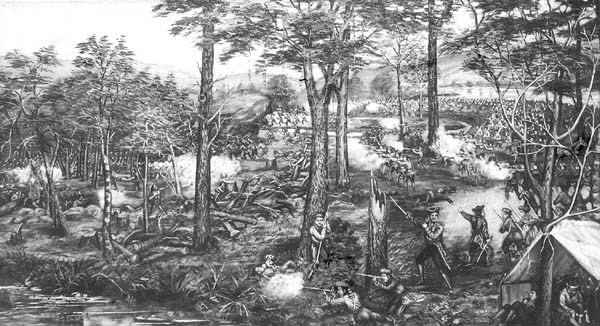
Military service during Lord Dunmore’s War (1774) showcased his frontier expertise, though his role was limited and non-combat. He served as a sergeant leading a 4-day patrol (pay 2/4) and as a private for 10 days under Captain William Russell (pay 6/), both detached actions supporting frontier defense rather than the Battle of Point Pleasant (October 10, 1774) (Fincastle County militia payroll, p. 255).
Migration and Settlement in Kentucky (1785–1790s)
Henry’s westward migration began around 1785, drawn by Kentucky’s fertile lands scouted during his hunts, though he remained in Washington County, Virginia, in 1785 and Russell County, Virginia, through at least 1790. His earliest reliable permanent presence in Kentucky is documented in the 1792 Nelson County Tax Book, marking his settlement in the region. Nelson County entries for Henry prior to 1792, including the 1789 Green County tithable (1 tithable on Brush Creek), likely pertain to his nephew Henry, son of Rev. James Skaggs, rather than Henry the Long Hunter. This nephew’s presence with his father James and brother William in Nelson County during this period aligns with the absence of enslaved individuals in those records, consistent with Henry the Long Hunter’s holdings. Land acquisition accelerated, with the 1792 Nelson County Tax Book listing 200 acres, 5 enslaved persons (3 over 16, 2 under 16), 15 horses, and 21 cattle, with a white male 16–20 in the household (possibly a son). This prosperity, built on hunting profits, supported his growing family, including daughter Nancy’s marriage to Peter Despain on December 20, 1791, and daughter Rachael’s marriage to Thomas Ray on January 27, 1794 (both Green County marriage records, father Henry Skaggs). These events evidenced family establishment in the region.
Peak of Influence and Family Expansion (1795–1807)
The 1795 Green County Tax Book shows 5 enslaved persons and 26 cattle, reflecting agricultural focus. In 1796, he held 150 acres (patented to himself), 5 enslaved persons, 7 horses, and 25 cattle, with family members like Solomon (73 acres) appearing. A 1797 absence from records may indicate land transfers or travel, but he reemerged in 1799 with 5 enslaved persons and 6 horses.
The 1800 Green County Tax Book lists 174 acres, 5 enslaved persons, and 7 horses. By 1801, land reduced to 43 acres (patented to himself), 5 enslaved persons, and 8 horses, suggesting distribution to kin. The July 14, 1802, deed transferred 79 acres from a 400-acre Pittman’s Creek settlement to Solomon Skaggs (with wife Mary), formalizing family support (Green County Deed Book #1).
In 1807, Henry and his brother Charles Skaggs appointed John Smith to convey locator rights for 48,000 acres in Floyd County, Kentucky (7,000, 40,000, and 1,000 acres, entered 1787 for John Preston), highlighting ongoing land speculation (Green County Power of Attorney).
Marriage and Children
Henry the Long Hunter married Mary, likely in the late 1750s or 1760s, establishing a family that grew despite his frequent absences on frontier expeditions. Their union, rooted in the New River Valley or Virginia backcountry, is documented through birth records kept by family associate Archibald Thompson, covering children born up to 1771. Additional children are identified through his will and the 1815 estate dispute.
- John Thompson Skaggs:
- Born: December 4 or 5, 1760
- Notes: Named in the Archibald Thompson Journal; likely the eldest son, though exact role in family records is unclear.
- Lucy Skaggs:
- Born: December 5, 1762
- Notes: Recorded in the Thompson Journal; later married, possibly to a Stacy, based on 1815 estate disputes.
- Solomon Skaggs:
- Born: January 30, 1766
- Notes: Appears in 1796 Green County Tax Book with 73 acres; received 79 acres from Henry in 1802 (Green County Deed Book #1).
- David Skaggs:
- Born: April 28, 1767
- Notes: Listed in 1790 Russell County Tax List; involved in family land transactions.
- Silvanus Skaggs:
- Born: February 18, 1769
- Notes: Known as Silvy; married a Roark, per 1815 court case; involved in estate disputes.
- Mary Skaggs:
- Born: December 19, 1771
- Notes: Married a Combs; plaintiff in 1815 Green County Circuit Court Case #5389 over inheritance.
- Rachael Skaggs:
- Born: Estimated late 1760s or early 1770s (exact date unavailable)
- Notes: Married Thomas Ray (m. January 27, 1794, Green County); plaintiff in 1815 case.
- Nancy Skaggs:
- Born: Estimated early 1770s (exact date unavailable)
- Notes: Married Peter Despain (m. December 20, 1791, Green County); likely "Nancy Spain" in 1815 court case.
- Sally Skaggs:
- Born: Estimated mid-1770s or later (exact date unavailable)
- Notes: Defendant in 1815 case; possibly unmarried or a younger child not in Thompson Journal.
Later Years, Death, and Legacy (1808–1815)
The 1810 U.S. Census records Henry (male 45+), Mary (female 45+), one female 16–25, one female under 10, and 8 enslaved persons in Green County, indicating an extended household. Henry died between the signing of his will on April 5, 1809, and its submission for probate on December 24, 1810, as per his probate inventory ($1,782, including 6 enslaved persons: Charles, Lucy, Sam, Nancy, Dick, Sally; livestock and goods) (Green County Probate Inventory).
The June 1815 Green County Circuit Court Case #5389 contested his will, alleging vagueness and mismanagement by executors Elias Barbee and James Skaggs, and widow Mary. Plaintiffs, including daughters Rachael Ray, Nancy Spain (likely Despain, m. 1791), Silvy Roark, Mary Combs, and defendants Sally Skaggs and Lucy Stacy, sought nullification or equitable distribution. The case referenced additional enslaved persons (Bob, Ned, three from a woman’s increase) and land for Mary’s life estate, then to John Skaggs (son of James Jr.), revealing family tensions over inheritance.
Henry Skaggs’ legacy endures as a Long Hunter who bridged exploration and settlement, amassing land and family in Kentucky while navigating frontier perils. His will and estate disputes underscore the complexities of frontier life, where wealth from enslaved labor and land claims fueled expansion but sowed familial strife.
References
- Augusta County Order Book No. 10, p. 477 (March 18, 1767).
- Augusta County Land Deeds (August 17, 1769).
- Archibald Thompson Journal (birth records, 1760–1771).
- Documentary History of Dunmore's War, 1774, pp. 238–240.
- Fincastle County Militia Payroll, p. 255 (1774).
- Montgomery County Muster Rolls (September 9–October 6, 1777; March 31, 1781).
- Montgomery County Land Survey (March 8, 1783; May 1, 1784).
- Washington County Personal Property Tax List (H Smith's Return, 1785).
- Russell County Personal Property Tax Lists (1787–1790).
- Nelson County Tax Book (1792).
- Green County Marriage Records (December 20, 1791; January 27, 1794).
- Green County Tax Books (1795–1801).
- Green County Deed Book #1 (July 14, 1802).
- Green County Power of Attorney (1807).
- U.S. Census, Green County, Kentucky (1810).
- Green County Probate Inventory (December 24, 1810).
- Green County Circuit Court Case #5389 (June 1815).
- Kegley, F.B. Militia of Montgomery County, Virginia, 1777-1790.
- Kegley, F.B. Tithables of Southwest Virginia.


Comments
Post a Comment
Comments are moderated at whim.