The Skaggs and Frontier Militia Service During the American Revolution
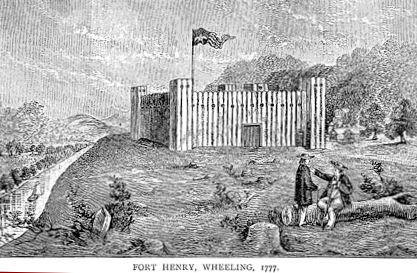
The following describes the type of military activity in which local militiamen e.g. the Skaggs in the 1781 Montgomery County militia would have been involved.
The pension attestations cover two main regions: the southern frontier along the Clinch River (Tazewell/Giles/Montgomery counties, via Witten S6407 and Oney S8909) and the northern frontier in Monongalia (now Harrison/Lewis/Randolph counties, via West W6450, Cutright W6626, and Sleeth S6111). The declarations consistently describe a guerrilla-style conflict: reactive, small-scale, and grueling, with volunteers or local militia acting as "spies" or "rangers" to protect isolated settlements from Indian raids (primarily Shawnee, but also Wyandot and Mingo). Service was often intermittent and seasonal, without formal Continental Army involvement.
Note: These files include later investigations by U.S. District Attorney Washington G. Singleton (1834–1835), who uncovered widespread pension fraud in Lewis/Harrison counties (detailed in Sleeth's file). Some claims were exaggerated by agents, but the core descriptions of day-to-day service align across legitimate accounts. I've focused on credible patterns, cross-referencing with witnesses and historical context.
1. Service on the Southern Frontier (Clinch River Valley, 1776–1780)
From Witten (ensign, aged 80 in 1832), Oney (private, aged 75+ in 1833), and cross-references to Cecil:
- Unit and Command Structure: Montgomery County Militia under Col. William Preston and Maj. Walter Crockett. Local company under Capt. Thomas Mastin, Lt. James Maxwell, Ens. Thomas Witten. Composed of "frontier settlers" or "minute men" from sparse, vulnerable areas—always ready but not drafted like eastern militia.
- Duration and Nature: 6 months/year for 4–7 years (spring to fall, when raids peaked; winters at home). Witten: "Engaged as an Indian spy... fully six months in each year" from June 1776 onward. Oney: Drafted March–September annually from 1777–1780, stationed at Witten's Fort or Scaggs Fort.
- Daily Operations:
- Scouting/Spies: Small patrols (no large battles) ranging along Clinch River from Bluestone headwaters to forks (now Russell County). Witten: "Frequent scouting expeditions as Indian spies" to detect signs and prevent massacres.
- Defensive Duties: Guarding settlements, pursuing war parties after attacks. Oney: "Those small skirmishes which characterize the savage mode of warfare." Witnessed "indiscriminate ferocity" on families.
- Logistics and Hardships: Self-supplied (rifles, food from home); no Continental support. Witten: "Eye witness to... inhuman butchery." No written discharges due to informal, ongoing service.
- Example Snippets:
- Witten (1833 amendment): "First entered the service as a minute man... continued in active service as an Ensign until about the first of December" annually.
- Oney (interrogatories): "Drafted by the order of Col. Preston... performed my services entirely on the frontier... no Regular troops with me."
- Outcomes: Witten pensioned $40/year (died 1841). Oney pensioned $80/year. Cecil's witnesses.
This mirrors Cecil: Perpetual readiness, family defense, no pitched battles.
2. Service on the Northern Frontier (Monongalia Region, 1777–1781)
From West (private, aged 72 in 1832), Cutright (private, aged 78 in 1832), Sleeth (private, aged 70 in 1832; detailed petitions from 1826–1833):
- Unit and Command Structure: Rangers under Capt. James Booth (recruited by Col. Sampson Mathews of Augusta County). Lt. Edmond Freeman succeeded Booth after his death (June 16, 1778, by Indians on Booth's Creek). Local volunteers from settlements like West's Fort (Hackers Creek), Nutter's Fort, and Buckhannon Fort. No rolls/returns due to Booth's killing.
- Duration and Nature: 13–18 months continuous (May 1777/1778–Nov 1779). Sleeth: Enlisted for 18 months as "rainger" to protect from "ravages of the Indians." Cutright: Volunteered for 18 months; West: 13 months. Some (West, Sleeth) later volunteered under Capt. George Jackson for 1780–1781, joining George Rogers Clark's expedition down the Ohio to Louisville (no Indian fighting there).
- Daily Operations:
- Ranging/Spies: Patrolled vast areas (now Harrison, Randolph, Wood, Tyler, Lewis counties). Small groups (no large units) scouting trails, guarding forts, pursuing raiders. Sleeth: "Constantly exposed to all kinds of weather... compelled to use the Earth for a bed." Cutright: "Ranged the counties... in several skirmishes with the Indians."
- Defensive Duties: Stationed at forts; reactive to attacks (e.g., horse thefts, killings). West: "Served thirteen months under said Booth as a Ranger." After Booth's death, continued under Freeman without discharges.
- Logistics and Hardships: Self-supplied; no pay (petitions to Virginia Legislature for back pay). Sleeth: Suffered "rupture of the belly" (hernia) requiring truss for 20 years; rheumatism from exposure. Cutright: Wounded pursuing Indians post-service (1780s).
- Example Snippets:
- Sleeth (1826 petition): "Served as a rainger for about 13 months... received a rupture... compelled to wear a truss... still labouring under the aforesaid rupture & rumatism."
- Cutright (1832): "Continued in the service as an Indian Spie... spied through the counties of now Randolph, Harrison, Lewis... no discharges."
- West (1832): "Enlisted in a company of rangers... served thirteen months... Capt Booth was killed by the Indians... never gave to West a discharge."
- Outcomes: All petitioned Virginia for pay (e.g., Sleeth 1826–1831; Cutright 1832). Pensions suspended amid fraud probes; West and Cutright restored. Sleeth's file exposes Singleton's biases (e.g., "Fraud" despite witnesses).

Overall Patterns in Frontier Service (1774–1794)
Synthesizing all files (including Cecil), service was informal, community-driven, and hazardous—far from eastern campaigns. Use this table for comparison:
| Aspect | Southern (Clinch) | Northern (Monongalia) |
|---|---|---|
| Enemies | Shawnee, Cherokee; small war parties (5–30) raiding families/horses. | Shawnee, Wyandot, Mingo; similar raids, but over larger wilderness. |
| Tactics | Spying circuits; pursuits after attacks; fort garrisons. Small skirmishes; ambushes. | Ranging patrols; fort defense (e.g., West's, Buckhannon). Skirmishes; pursuits. |
| Group Size | 3–12 spies; companies ~30–50. | Similar; rangers in small detachments. |
| Environment | River valleys; thickets/laurels. Hunger/exposure common. | Forests/rivers; "Earth for a bed"; injuries from hardships. |
| Compensation | No pay/discharges; later state petitions. | Same; many unpaid until 1830s acts. |
| Personal Toll | Witnessed "butchery"; family risks. | Captain killed; wounds (e.g., Cutright); long-term injuries (Sleeth). |
Frontiersmen supplied themselves, faced constant threats, and saw service as survival duty. No glory—mostly "hunger and exposure killed more... than Indian bullets" (as in earlier files).
References:
- William Cecil Pension Application (R1823): Details perpetual readiness and spy duties along the Clinch River under Capt. Thomas Mastin.
- Thomas Witten Pension Application (S6407): Describes ensign service, scouting expeditions, and seasonal returns home from 1776 onward.
- Joseph Oney Pension Application (S8909): Outlines minute-man duties, small skirmishes, and defense of sparse frontier settlements.
- Alexander West Pension Application (W6450): Recounts ranger enlistment under Capt. James Booth, 13 months of patrols, and no discharges due to Booth's death.
- John Cutright Pension Application (W6626): Narrates 13–18 months as a ranger, skirmishes, and wounds from pursuits.
- David W. Sleeth Pension Application (S6111): Petitions highlight 13–18 months of ranging, exposure hardships leading to injuries, and Singleton's fraud investigations.


Comments
Post a Comment
Comments are moderated at whim.